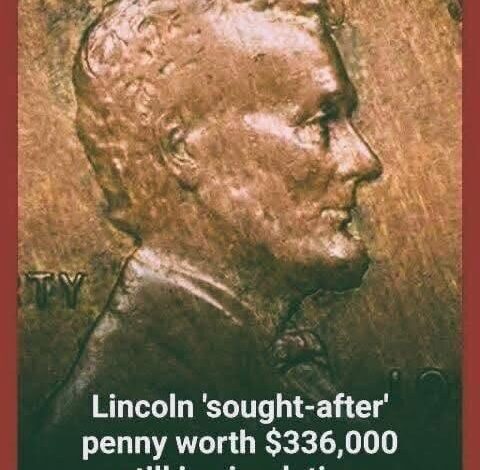
In the quiet corners of American households, tucked away in dusty glass jars, forgotten coat pockets, and the deep crevices of sofa cushions, lies a potential fortune that most people treat as mere metallic clutter. We often dismiss our spare change as a minor inconvenience, a collection of low-value tokens used for exact change or forgotten tips. However, the world of numismatics—the study and collection of currency—harbors secrets that can turn a common cent into a life-changing windfall. At the pinnacle of this hidden treasure hunt is a coin born of a wartime accident, a piece of copper-colored history that has become the most sought-after error in the history of the United States Mint. This is the story of the 1943 Bronze Lincoln Cent, a coin so rare and valuable that a single specimen recently commanded a staggering $336,000, leaving ordinary Americans wondering if they might be sitting on a small fortune.Books & Literature
To understand how a simple penny can attain such astronomical value, one must look back to the height of World War II. In 1943, the United States was fully committed to the global conflict, and the demand for raw materials was unprecedented. Copper, the primary component of the traditional Lincoln Cent, was a critical resource needed for the production of shell casings, telephone wires, and other essential military equipment. In a move to conserve this vital metal, the U.S. Mint made a historic decision: for the duration of the year 1943, pennies would no longer be made of bronze. Instead, the Mint began producing “steelies”—cents made of steel and coated with a thin layer of zinc to prevent rusting. These coins were distinctive for their silver-like appearance and their magnetic properties, and they remain a common curiosity for collectors today.
However, in the high-pressure environment of the wartime mints in Philadelphia, Denver, and San Francisco, a monumental mistake occurred. As the machinery transitioned from the 1942 bronze production to the 1943 steel production, a handful of bronze “planchets”—the blank metal discs used to strike coins—remained trapped in the large hopper bins or caught in the crevices of the massive striking presses. When the 1943 dies were loaded and the presses began their thunderous work, these stray bronze discs were struck with the 1943 date. Unnoticed by quality control inspectors, these “errors” were mixed in with millions of the new zinc-coated steel cents and shipped out to banks across the country. They slipped into the American economy, hiding in plain sight among their silver-colored brothers.
The legend of the “copper 1943 penny” began to circulate shortly after the war ended. By 1947, rumors of a rare bronze version of the wartime cent began to pique the curiosity of the public. At first, the U.S. Mint flatly denied that any such coins existed. Official statements suggested that any copper-colored 1943 cents were likely the result of clever counterfeiters plating the common steel cents with copper or using “mercury tricks” to alter the coin’s appearance. For years, the 1943 Bronze Cent was treated more as an urban legend than a documented reality. It was the “Bigfoot” of the coin world—frequently whispered about but never officially confirmed.Beef
Everything changed when metallurgical testing and expert analysis finally caught up with the rumors. Through rigorous scientific examination, experts were able to confirm that genuine bronze planchets from 1942 had indeed been struck with 1943 dies. These were not fakes; they were authentic products of the Mint, created by a fortunate industrial oversight. Once the existence of the coin was validated, the hunt was on. Estimates suggest that no more than twenty of these bronze beauties were ever minted across all three locations. This extreme scarcity, combined with the romantic allure of a wartime relic, caused the market value of the coins to skyrocket.
One of the most famous and inspiring stories of discovery involves a Massachusetts teenager named Don Lutes Jr. In 1947, while standing in a high school cafeteria line, Don received a copper-colored 1943 penny in his change. Being a curious young man, he noticed the discrepancy and kept the coin, even after being told by the Mint that such a coin was impossible. He held onto that “impossible” penny for over seventy years, keeping it as a personal memento of a lucky day at school. When the coin was finally put up for auction following his passing, the “Lunch Money Penny” sold for more than $200,000. It served as a powerful reminder to the public that these treasures were not just found in the vaults of the wealthy; they were circulating in the pockets of ordinary citizens.
For the average person looking to strike it rich in their own coin jar, identifying a genuine 1943 Bronze Cent requires a bit of detective work. The most common pitfall is the “copper-plated” steel cent. During the 1940s and 50s, many people plated their 1943 steel pennies with copper as a novelty or a deceptive trick. The easiest way to tell the difference is a simple magnet test. Because steel is magnetic, a plated 1943 cent will stick to a magnet with ease. A genuine, valuable 1943 Bronze Cent, however, is non-magnetic and will not react. Furthermore, a genuine bronze cent will weigh approximately 3.11 grams, whereas the steel versions weigh closer to 2.7 grams. These small physical differences are the gatekeepers between a common cent and a six-figure payday.